
Key takeaways
- Jewellery shops can identify repeat customers using existing CCTV and rule-based AI alerts.
- The same setup can improve both sales outcomes and security response quality.
- Start with one showroom pilot and measure repeat-visit conversion before scaling.
Table of contents
In jewellery retail, repeat customers are often your highest-value segment. They come back for anniversaries, family events, upgrades, and referrals. But without a reliable system, staff may miss these moments and treat returning buyers like first-time visitors.
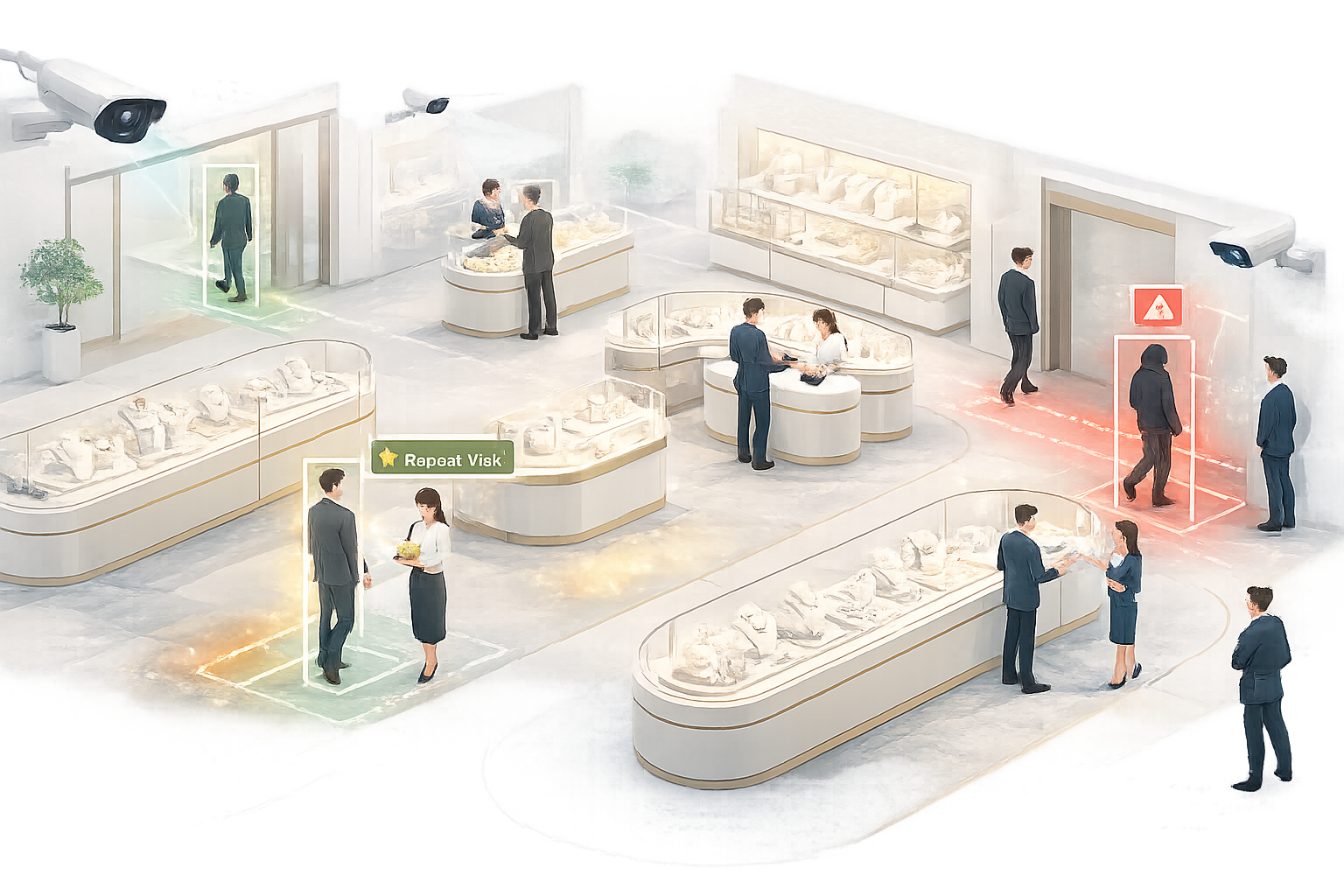
AI CCTV helps solve this by recognizing known customer patterns in real time and sending alerts to the store team. This improves customer experience while also adding a smarter security layer in high-value retail environments.
What repeat-customer detection means in jewellery retail
Repeat-customer detection uses computer vision to identify known visitors across store entries and key zones. When configured with proper consent and policy controls, the system can notify staff that a returning customer has entered, along with profile context such as prior purchase category or visit frequency.
Why this matters for sales and security
- Sales uplift: faster personalized greetings and better product recommendations.
- VIP handling: high-value customers receive consistent service across shifts.
- Risk awareness: repeated unusual visits near premium counters can be flagged for review.
- Manager visibility: objective, timestamped events instead of memory-based tracking.
How AI CCTV works in real jewellery stores
- Map key cameras: entrance, premium display zones, billing counter, and private consultation areas.
- Create customer identity rules: define who can be enrolled and what consent flow is required.
- Configure alerts: repeat-visit detection, VIP arrival notification, and unusual dwell patterns.
- Route events: send signals to store manager, sales associate, and security desk by role.
- Review weekly: tune confidence thresholds and reduce non-actionable alerts.
High-impact use cases for jewellery shops
1) VIP greeting and assisted selling
The system alerts associates when a repeat customer enters, helping teams continue previous conversations and offer relevant collections.
2) Repeat-visit intent scoring
Multiple visits in a short period may indicate high buying intent. Teams can prioritize follow-up and appointment-driven selling.
3) Security exception intelligence
AI can flag repeated suspicious behavior patterns such as frequent visits during low-staff windows or extended dwell near high-value showcases.
4) Multi-branch consistency
For chains, repeat-customer signals across branches help maintain premium service continuity and improve fraud-prevention context.
Integrations that make the workflow useful (webhook, CRM, POS)
- Webhook alerts: push repeat-visit and VIP-entry events to your internal apps in real time.
- CRM sync: connect returning customer detection with profile notes and relationship history.
- POS mapping: track whether repeat-customer visits convert into invoices and revenue.
- Security dashboard: correlate customer recognition with security incidents for audit context.
- Branch analytics: benchmark repeat-customer conversion by location, daypart, and team.
Recommended webhook fields
- Identity: customer ID token, site ID, camera ID, confidence score
- Visit context: event type, timestamp, zone, visit count window
- Business context: VIP flag, assigned associate, follow-up status
- Audit and security: model version, reviewer ID, signature, retry status
KPIs jewellery retailers should track first
- Repeat-customer recognition rate: detected repeat visitors vs expected repeat traffic.
- Repeat-visit conversion rate: returning visits that result in a purchase.
- Average billing uplift: repeat-customer bill value compared to first-time buyers.
- VIP response time: minutes from entry alert to associate engagement.
- Security exception closure time: incident detection to case closure.
Privacy and compliance checklist
- Display clear notices about AI-assisted monitoring and customer recognition scope.
- Use consent workflows where required by local regulations and company policy.
- Restrict profile access by role and log all manual changes and lookups.
- Set retention limits for recognition events and associated footage.
- Periodically audit false positives and bias risk to maintain system fairness.
How CoCompanionAI helps jewellery retailers
CoCompanionAI helps jewellery businesses turn existing CCTV into repeat-customer intelligence and security-ready event workflows, with practical deployment support from camera mapping to KPI reporting.
Foundation reading: What is video analytics?
Related operations guide: AI CCTV attendance system for every industry
Frequently Asked Questions (FAQ)
How can jewellery shops identify repeat customers using existing CCTV? ▾
Can repeat-customer detection also improve jewellery store security? ▾
What are the top sales benefits of repeat customer recognition? ▾
What integrations should jewellery stores enable first? ▾
Is AI CCTV customer recognition legal and privacy-safe? ▾
Conclusion
Jewellery shop repeat-customer intelligence is no longer just a CRM exercise. With AI CCTV, stores can connect service quality, conversion outcomes, and risk visibility in one operational layer using cameras they already own.
Book a walkthrough
See repeat-customer detection on your current showroom CCTV
Schedule a 30-minute session to map your jewellery store zones, define VIP and security rules, and launch a measurable pilot.