
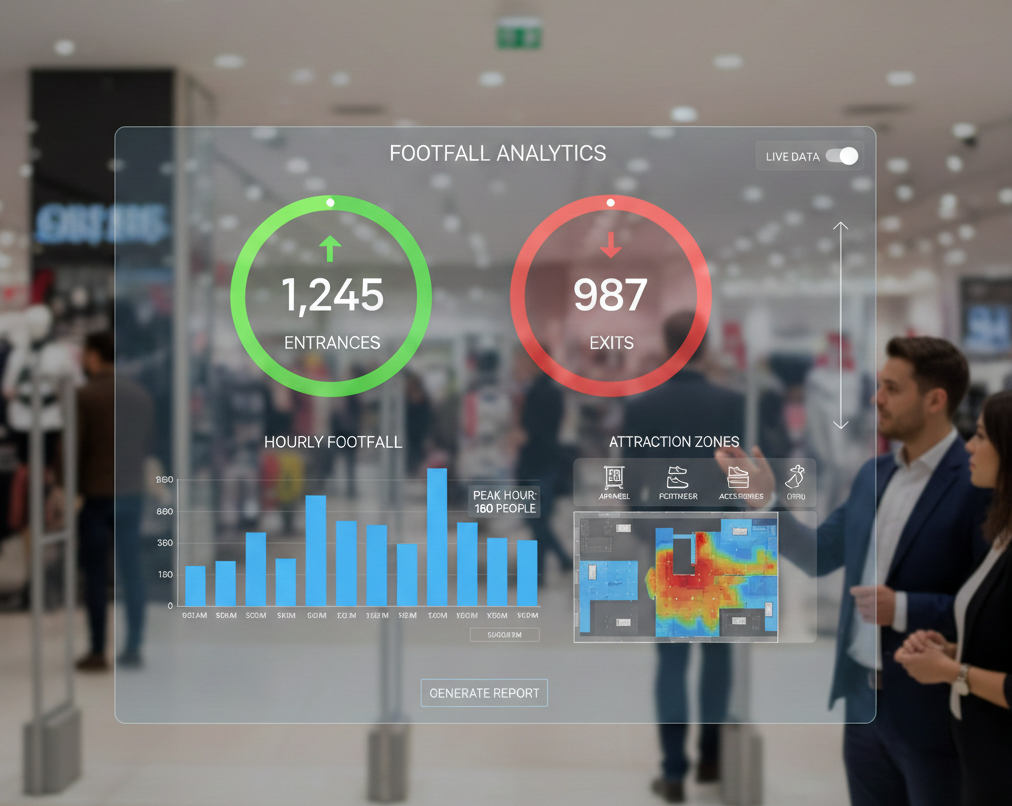
1. Footfall and People Counting
Think of this as a digital "manual counter" that never takes a break. It tracks how many people enter and exit a building, providing accurate data on peak hours. This helps businesses understand their busiest times so they can staff accordingly. This shows where customers spend the most time, helping businesses make better decisions.
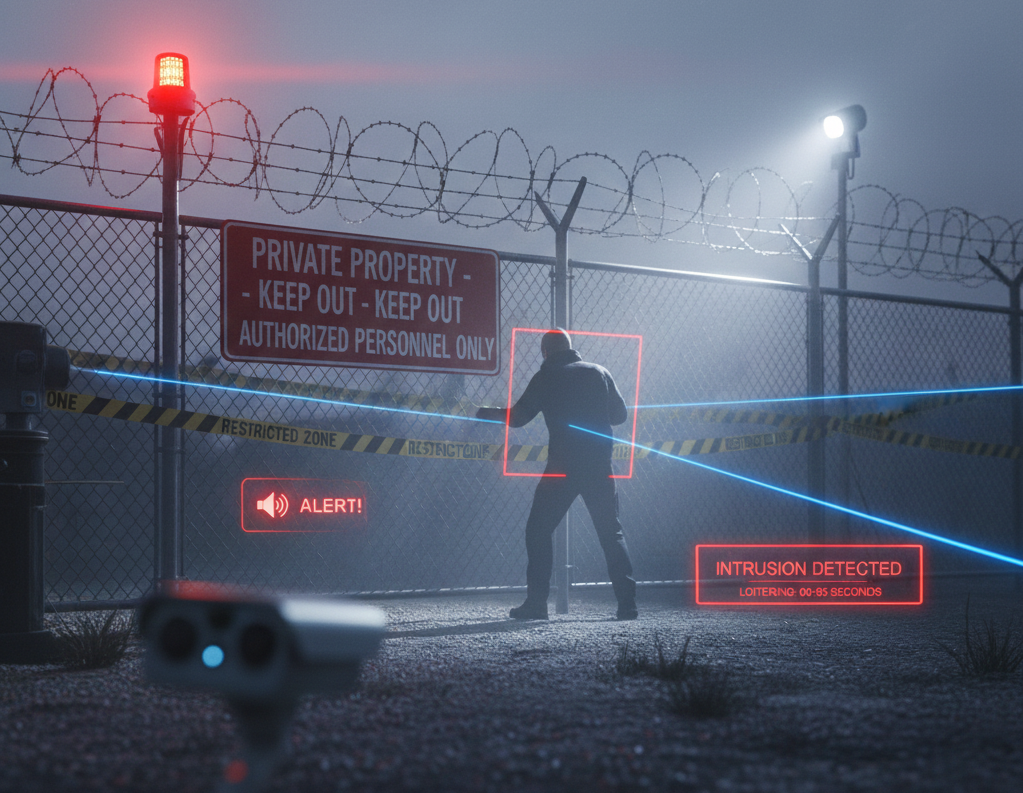
2. Intrusion and Loitering Detection
This is the modern version of a "Keep Out" sign. The AI creates a virtual fence around a property. If someone crosses that line or hangs around a sensitive area for too long (loitering), the system sends an instant alert to security before a crime even happens.
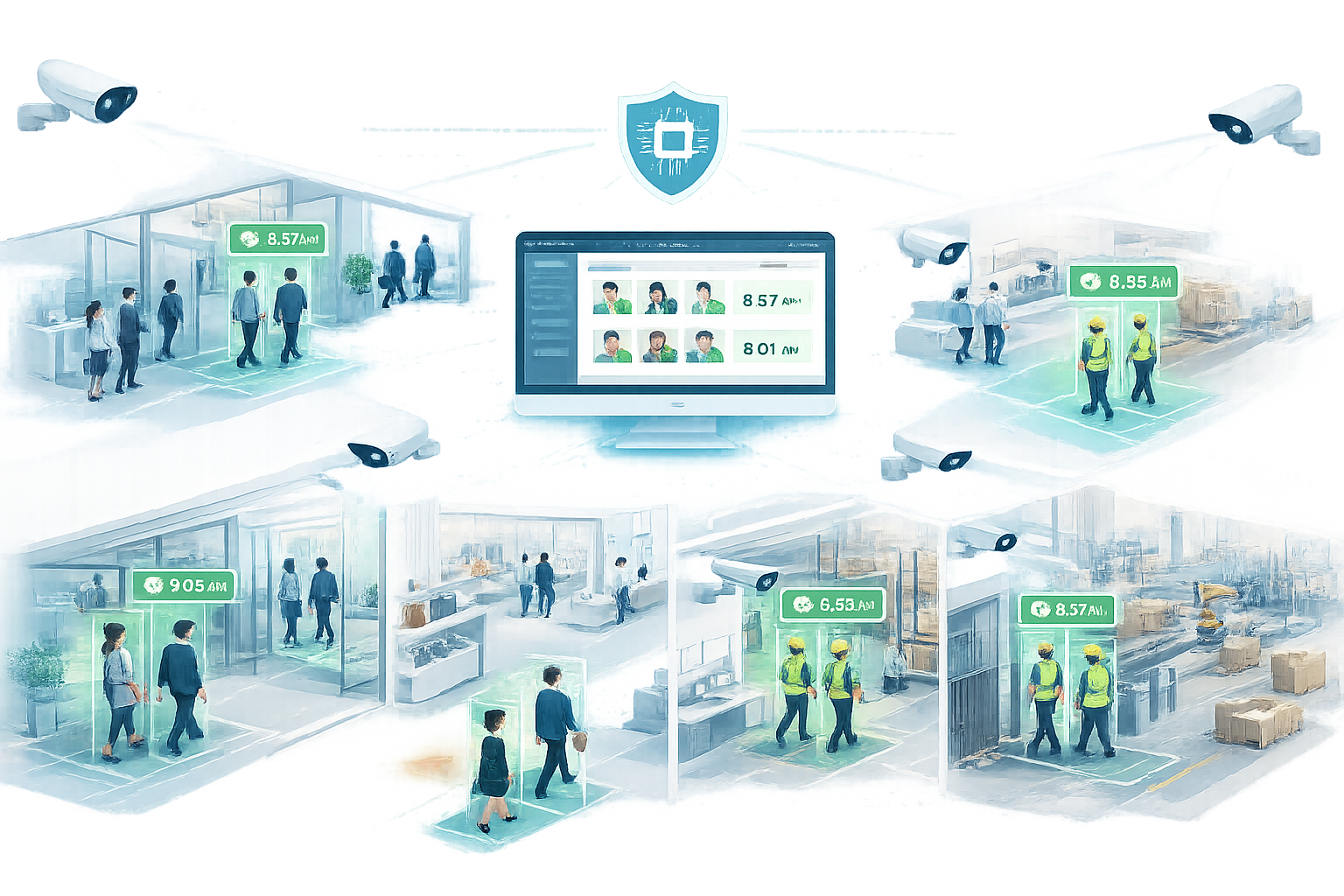
3. Face Recognition and Secure Attendance
Say goodbye to manual sign-in sheets and swipe cards. AI recognizes employee faces to grant building access and automatically logs attendance. It is fast, touchless, and highly secure, accurately recording "first-in" and "last-out" times for payroll and HR.
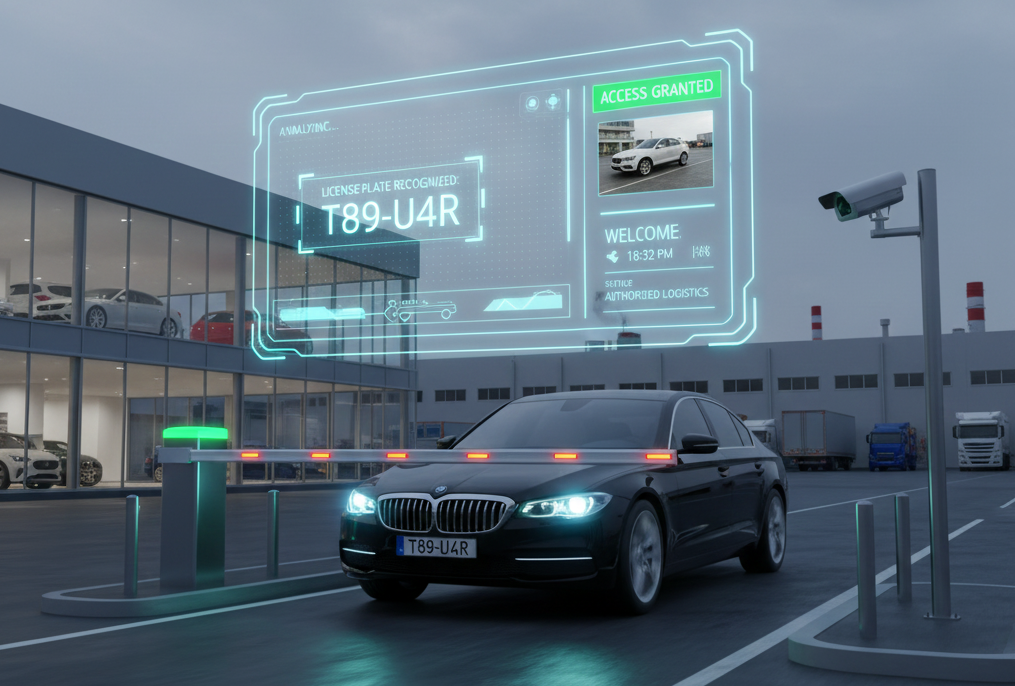
4. License Plate Recognition (LPR)
LPR allows cameras to read vehicle number plates as they pass by. It is widely used in gated communities, parking lots, showrooms, and industrial areas to control access for authorized vehicles, track logistics trucks, and monitor vehicle loads inside facilities. By automating entry and improving vehicle oversight, businesses can enhance security, streamline operations, and reduce manual checks.
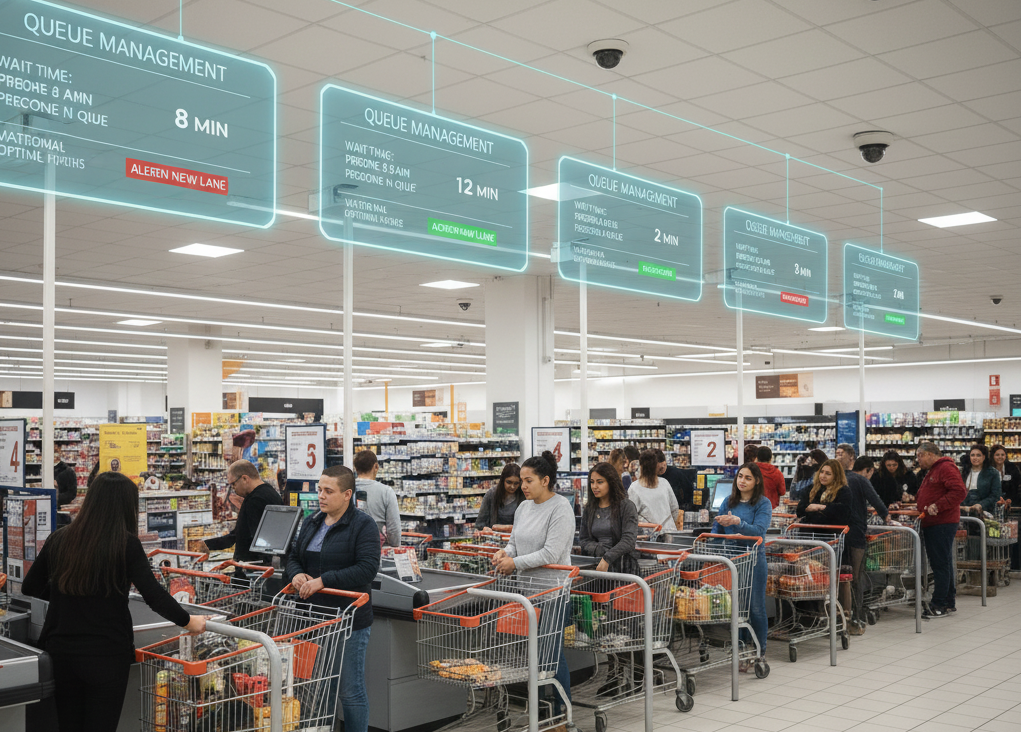
5. Queue Management and Wait-Time Analytics
Nobody likes waiting in line. AI monitors checkout counters or service desks and alerts managers the moment a line gets too long. This ensures customers are served faster and improves the overall experience in banks, stores, and airports.
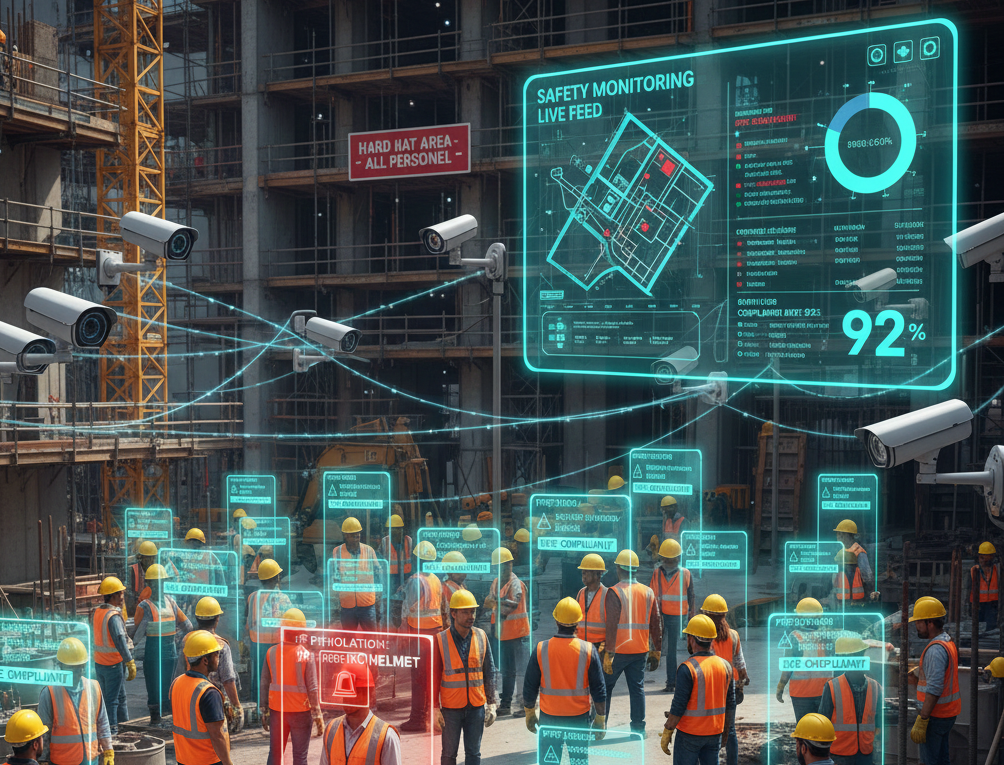
6. PPE (Personal Protective Equipment) Detection
In dangerous environments like construction sites, wearing a helmet or a safety vest is mandatory. AI cameras scan the area 24/7 to ensure every worker is wearing their gear. If someone forgets their helmet, the system flags it instantly to prevent accidents.
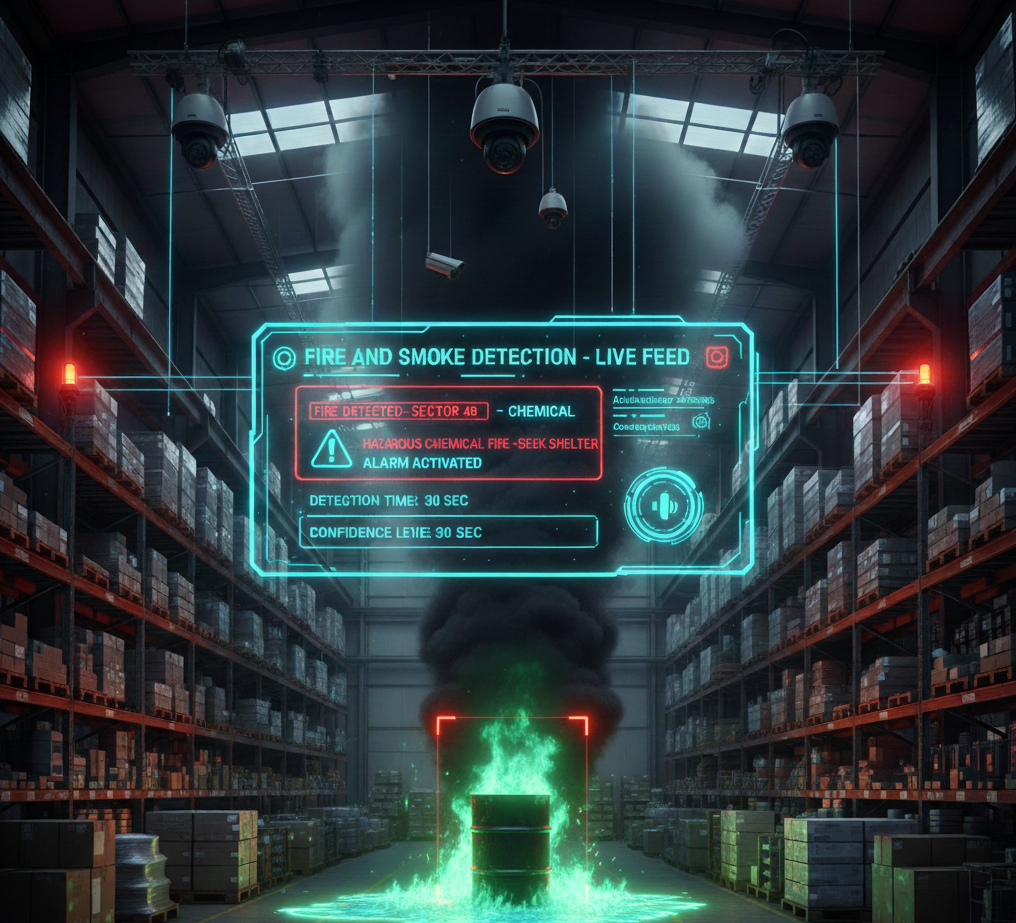
7. Fire and Smoke Detection
Traditional smoke alarms wait for smoke to reach a sensor. AI cameras, however, can see flames or smoke the second they appear, even in large open spaces like warehouses. This provides those critical extra seconds needed to save lives and property.
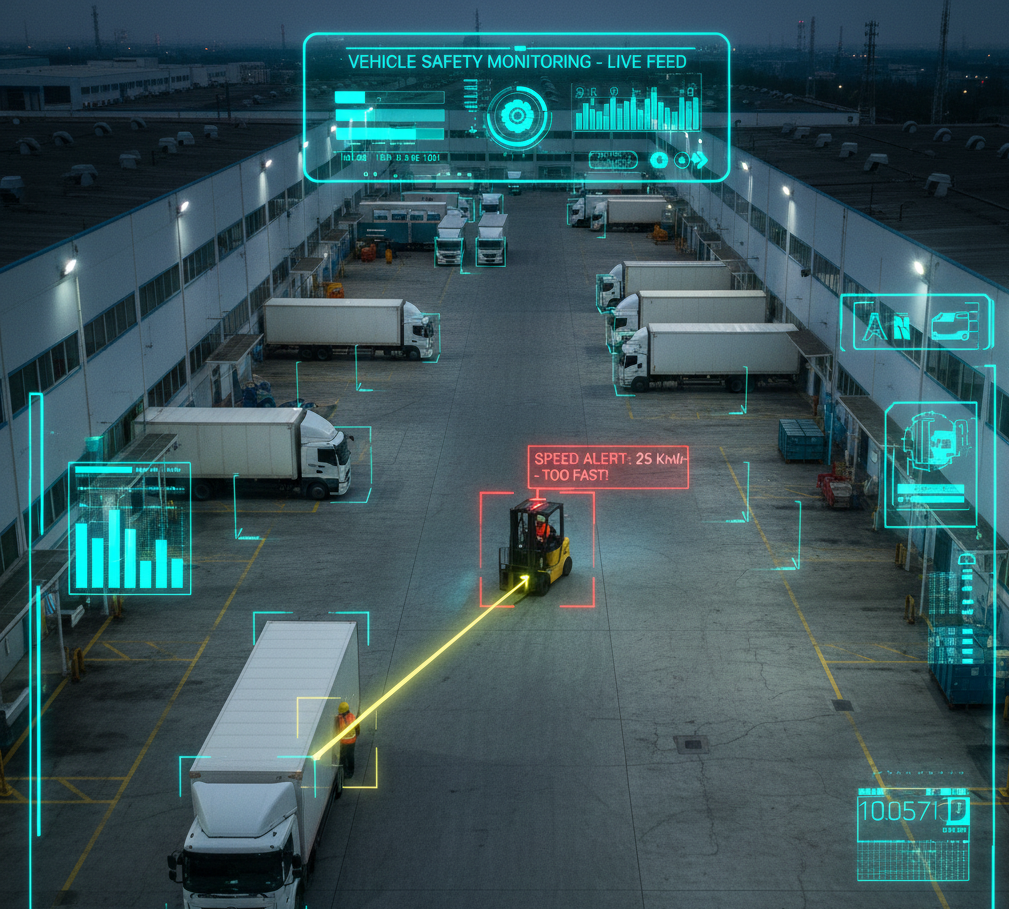
8. Vehicle Speed and Near-Miss Detection
Speeding forklifts or trucks in a factory yard are a major safety risk. AI vision acts as a virtual radar, flagging vehicles that are moving too fast or identifying "near-miss" situations where a pedestrian almost got hit, allowing for better safety training.
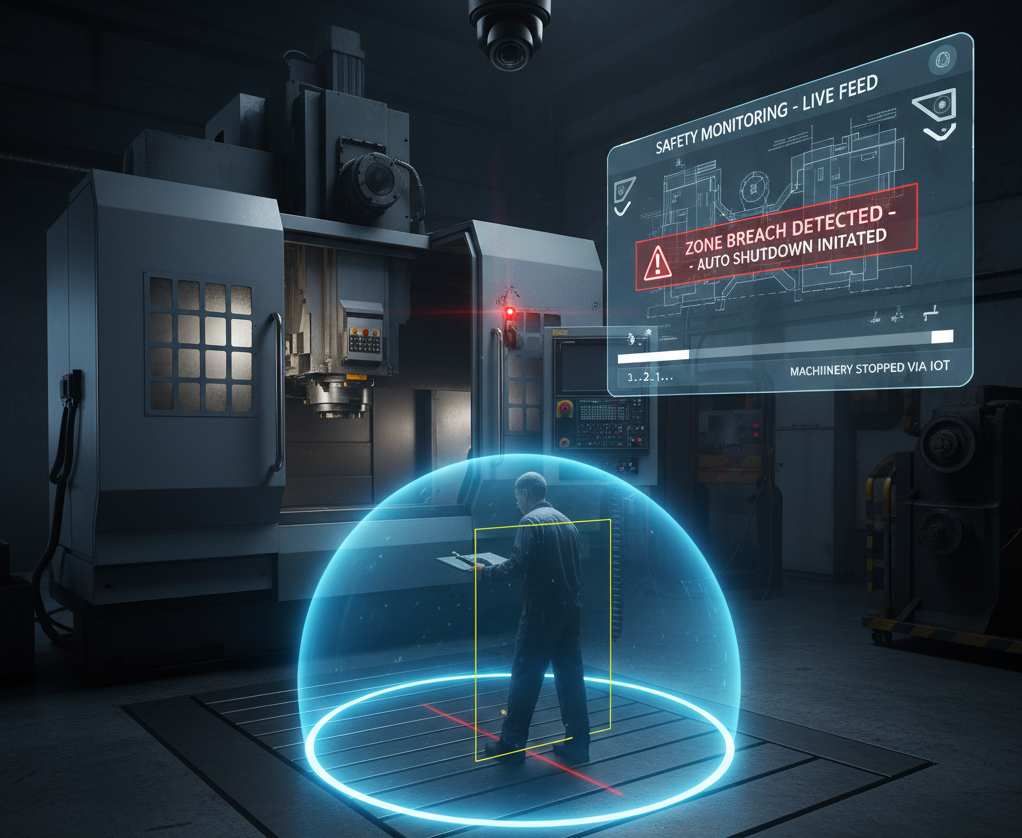
9. Safety Monitoring Near Heavy Machinery
Certain machines are hazardous zones while operating. AI video analytics can create a safety “halo” or virtual bubble around heavy equipment. If a person enters this zone, the system can trigger an automatic stop using IoT or edge devices, preventing accidents and ensuring workplace safety.
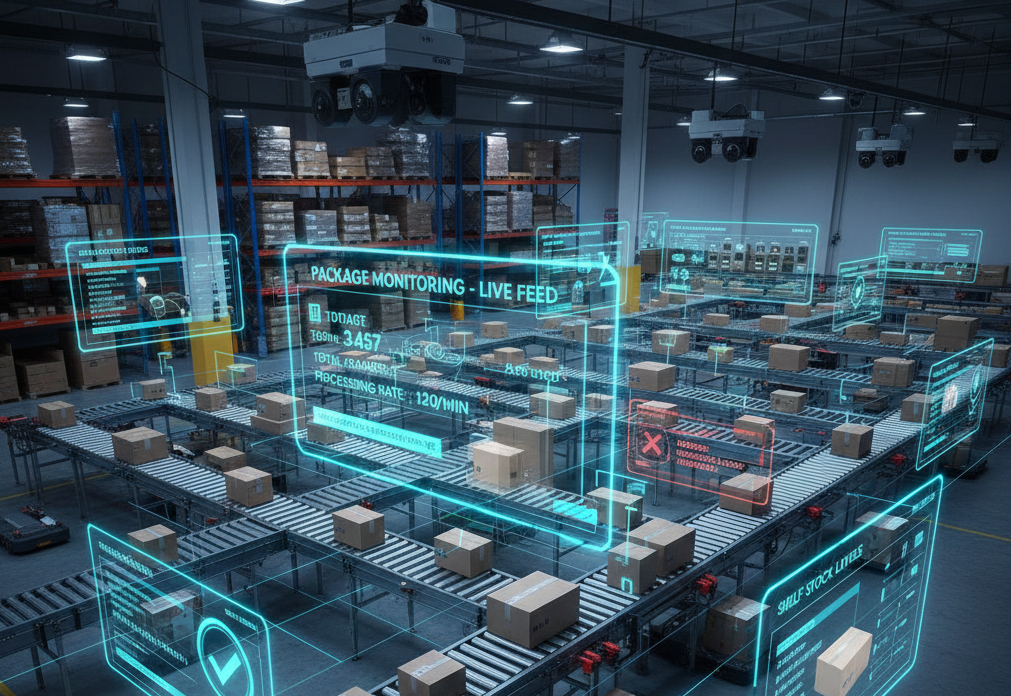
10. Package Monitoring and Object Counting
For e-commerce and logistics, speed is everything. AI can count packages on moving conveyor belts, verify that items are packed correctly, check for missing labels, and monitor stock levels on shelves. This automation reduces human errors, streamlines inventory management, and ensures that every package is handled correctly.
Core Benefits
| Benefit | How It Helps |
|---|---|
| Increased Safety | Detects risks like missing PPE, unsafe zones, or unauthorized access to prevent accidents. |
| Operational Efficiency | Automates tasks like counting people, monitoring license plates, and tracking inventory. |
| Cost Savings | Reduces manual monitoring, theft, and accident-related costs. |
| Data-Driven Decisions | Provides insights on footfall, traffic, and operations to optimize decisions. |
Industries Leading the Way
- Retail & Showrooms: Track customer movement, manage queues, and prevent theft.
- Manufacturing & Industrial: Monitor PPE compliance and hazardous zones.
- Logistics & Warehousing: Count packages, track stock, and oversee vehicle movement.
- Healthcare & Hospitals: Optimize patient flow and monitor restricted areas.
- Corporate Offices, Airports & Smart Cities: Control access and manage public spaces.
Frequently Asked Questions (FAQ)
Does AI video analytics work with my existing CCTV cameras? ▾
Is AI video analytics a threat to privacy? ▾
How accurate is AI detection for things like fire or PPE? ▾
Can AI video analytics work in low-light or bad weather? ▾
Can I view the image of the person who committed the violation? ▾
Conclusion
AI video analytics has transformed ordinary cameras into smart systems that protect people, monitor operations, and provide actionable insights. From retail stores and warehouses to hospitals and smart cities, businesses are using AI to improve safety, ensure compliance, optimize efficiency, and reduce costs.
CoCompanion makes implementation simple with real-time monitoring, PPE detection, license plate recognition, and package tracking. Investing now is more than security - it is a must-have tool to stay safe, efficient, and competitive in 2026 and beyond.
Book a demo
See CoCompanion in action
Schedule a walkthrough to explore use cases, alerts, and deployment options.